The Complete Guide to Infinite Zoom Videos (by someone who has made a loooot of them)
By Théo Garnot — Ogarno · September 9, 2026 · 8 min read
By Théo Garnot — Ogarno. Infinite zoom artist, Paris. Portfolio: theogarnot.com
Every few weeks someone sends me a message that says roughly the same thing: "I keep seeing these videos where the camera zooms into a drawing forever and a new scene keeps appearing. What is that called, and how is it made?"
This article is the long answer. It covers what an infinite zoom video is, where the format comes from, why it performs so well on Instagram, TikTok and YouTube, how I actually make one from a brand brief to delivery, what it costs, and the mistakes I see most often. I've made a loooot of these films since 2021, for Formula 1, Ubisoft, Activision, Disney, Burger King, Betclic and about thirty other brands, so this is written from the inside.
What is an infinite zoom video?
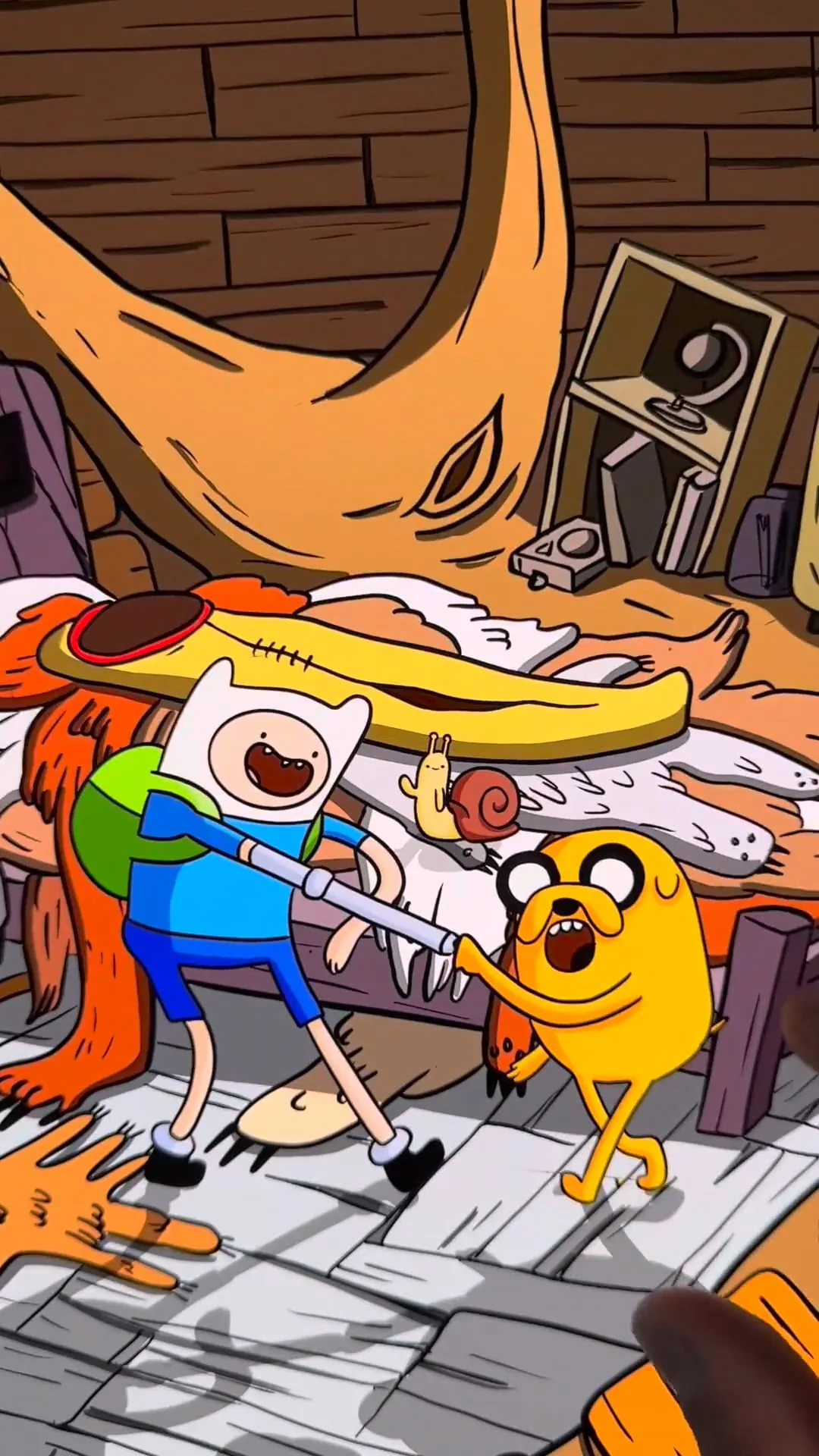
An infinite zoom video is a hand-drawn animation in which the camera keeps zooming into one detail of the image, and that detail turns out to contain a whole new scene. Then the camera zooms into a detail of that scene, and so on. There is never a cut. The film is one continuous dive.
The trick is that each scene is drawn at a different scale, nested inside the previous one. A window in a city becomes a room; a poster on the wall of that room becomes a beach; a shell on the beach becomes a planet. When the camera moves through them smoothly, the viewer's brain reads it as a single, impossibly deep image.
The format goes by several names, and they all describe the same thing:
- Infinite zoom — the most common name in English, and the one brands use.
- Zoom art — used mostly to describe the illustration itself rather than the video.
- Infinite drawing or endless drawing — used by illustrators, and the name of the technique when it's drawn live.
- Pinch-and-zoom video — because on a phone, the natural gesture for this format is pinching into the image.
- Infinite story — when the zoom tells a story from scene to scene, which is what I try to do every time.
- Zoom illusion — how people describe it when they don't know the name yet.
If you search any of these, you'll land on the same kind of video.
Where does the format come from?
Nested images are old. The Droste effect (a picture containing a smaller copy of itself) dates from early 20th-century packaging, and M.C. Escher explored recursive space in the 1950s. On the internet, the Zoomquilt collaborative project (2004) is usually credited as the first viral infinite zoom: a chain of paintings by different artists, each one hidden inside the last.
What changed in the 2020s is the phone. Vertical video, the pinch gesture, and short-form feeds built for retention made infinite zoom a native format rather than a curiosity. I started drawing them in 2021 for the love of it; the first brand brief came a few months later.
Why do infinite zoom videos perform so well on social media?
Three reasons, and they're all about attention.
Every second promises a new scene. Most videos lose viewers in the first three seconds because the viewer has already understood what the video is. An infinite zoom never finishes explaining itself: there is always one more layer. Watch time is the metric every platform rewards, and this format is built for it.
It survives being watched twice. The first watch is about the dive. The second watch is about the details you missed. Comments like "wait, was that a cat in the window?" are what send a video back into the feed. Across my own channels, this is the format that got me to 350M+ views and 900k+ followers.
The brand can live inside the world instead of on top of it. In a normal ad, the logo is an interruption. In an infinite zoom, the product, the mascot or the logo can be the destination you land on, a detail you only catch on the second watch, or the world itself. Viewers don't skip it, because it's part of the drawing.
How is an infinite zoom video made?
This is the part people ask about most. Here is my actual process, tool by tool. Two apps, one iPad, and a lot of hours.
1. The storyboard, in Endless Paper
Everything starts in Endless Paper, an iPad app and the first infinite-canvas app that made this kind of drawing possible. It's still the best one. On an infinite canvas you can zoom in forever, so I storyboard directly in the medium: I sketch rough, zoom into a detail, sketch the next scene inside it, zoom again. Nothing is clean at this stage. I'm searching for the best scenario, the best shot angle for each scene, and the composition that makes the transition feel inevitable.
For each scene the question is the same: what does it show, and which detail of it contains the next scene? That transition point is the whole craft. A good one feels obvious in hindsight; a bad one feels like a cut.
When it's a brand project, this rough storyboard is what we validate together before I draw anything clean. It's the cheapest moment to change your mind. For the Formula 1 season finale, it was ten scenes, one per highlight of the year.
2. Drawing everything clean, in Procreate
Once the storyboard works, I redraw everything properly in Procreate. I don't draw each scene as one image: I draw the elements separately — a building, a character, a vehicle, a sky — so each one can be placed, scaled and reused precisely later. Every element is drawn so the details hold up when you pinch in, because on a phone, people will.
This is where the hours go. A single film can be hundreds of separate elements, and the pass I care about most is the one where I hide things: the small jokes, the recurring characters, the details that make someone watch a third time.
3. The collage, back in Endless Paper
Then I import all the Procreate elements into Endless Paper and assemble the world: each element placed at its scale, each scene nested inside the detail of the previous one. The goal is a seamless collage that keeps very high resolution along the entire zoom path — from the widest view down to the deepest scene, nothing should go soft.
I zoom through it over and over until I'm happy. If a transition doesn't land, I go back to Procreate and redraw the element.
4. Recording, rhythm and the loop
The camera move is the last thing, not the first. Once the collage is perfect, I film the iPad screen with a real camera while I zoom through the world by hand — not a screen recording. A camera keeps the slight imperfections of a human gesture, and the zoom looks like someone diving into the drawing rather than a software animation. Then the footage goes into an edit: corrections of rhythm (the viewer needs just enough time to read each scene before being pulled into the next), color adjustments, and the cut that makes the video loop perfectly — the last scene diving back into the first, so the film never ends.
5. Delivery
The master is vertical-first, because that's where the format lives. A 16:9 version comes with it, and other formats on request. From brief to delivery, a brand film takes two to six weeks depending on the number of scenes and how complex they are.
Playable zooms: when the audience holds the camera
The newest version of the format isn't a video at all. For Betclic, I built an interactive zoom: a real exploration game in the browser, where the viewer pinches, scrolls, solves a mystery, collects hidden objects and unlocks a reward. No download. It drew 100,000+ visits in twelve hours.
The same nested-scene logic applies, but the viewer decides where to go. It's the difference between watching a film and being handed the map. For brands, it turns a 30-second view into several minutes of attention, and it gives people a reason to share a link rather than a clip.
What does an infinite zoom video cost, and how long does it take?
It depends on the number of scenes, how complex they are, the usage rights and the deadline. As a rule: more scenes means more drawing, and a shorter deadline means more of my week. A brief with those four things gets a quote within a week. Timing is two to six weeks.
Two practical notes for brands:
- Your product, mascot or logo can live inside the world — that's usually the point. We decide together where it sits in the dive.
- I usually post the film on my own channels too, which adds my audience to yours. We agree on that upfront.
The mistakes I see most often
Starting with the camera move. People animate a zoom first and try to fill scenes in afterwards. The result is a zoom with nothing to look at. Scenes first, camera last.
Transitions that cut. If the next scene doesn't come out of a detail that was already visible, the eye registers a cut, and the illusion is gone. Every transition has to be drawn into the previous scene.
Losing resolution along the zoom path. If one element in the collage is placed at the wrong scale, the pinch-in on a phone shows it as a blur. Every element has to stay sharp from the widest view to the deepest scene.
Forgetting the loop. An infinite zoom that just stops isn't infinite. The edit has to bring the last scene back into the first.
Too many scenes. More isn't better. Ten strong scenes with real transitions beat twenty weak ones. The Formula 1 recap is ten.
Forgetting the rewatch. The details you hide are not decoration. They're the reason for the second view, and the second view is the reason the algorithm shows the video to more people.
Frequently asked questions
Is an infinite zoom video animation or illustration?
Both. It's illustration in structure (every scene is a drawing) and animation in delivery (the camera move). Most of the time is spent drawing.
What tools do you use?
Endless Paper on iPad for the storyboard and the final collage, Procreate for drawing every element, a real camera pointed at the iPad screen to film the zoom, then a video editor for rhythm, color and the loop.
Can it be made with AI?
People can make what they want, with whatever tools they want. For my part, I have never used AI for my work: every drawing in every film is made by hand, in Procreate and Endless Paper. That's the point of it, and it's what brands come to me for.
How long is a typical film?
Thirty seconds to a minute for social. Longer versions exist for screens and events.
Vertical or horizontal?
Vertical first, because that's where the format lives. A 16:9 version is delivered alongside.
Can I see examples?
Every film is at theogarnot.com/work, newest first. The Formula 1, Betclic and Assassin's Creed ones are good places to start.
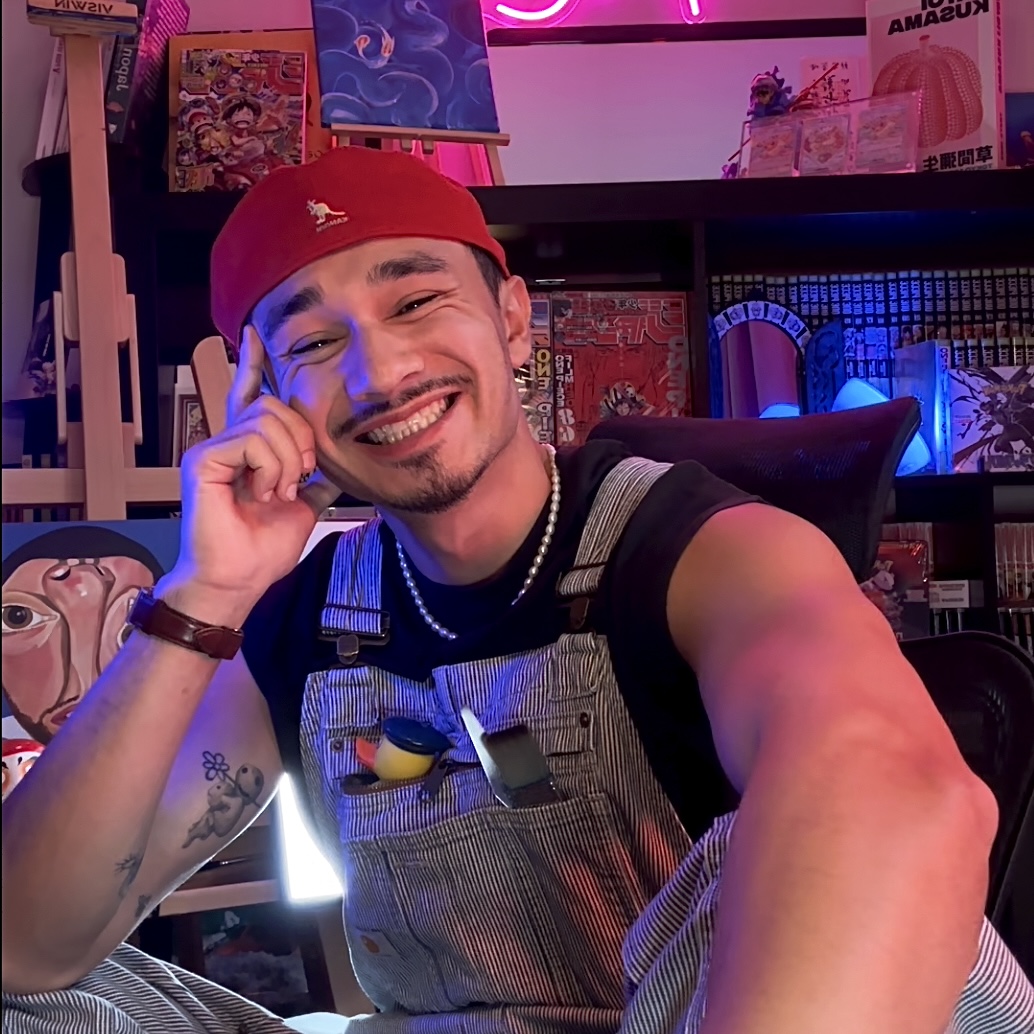
Théo Garnot, known online as Ogarno, is a French infinite zoom artist based in Paris. Since 2021 he has hand-drawn infinite zoom films for 35 brands including Formula 1, Ubisoft, Activision, Disney, Burger King and Betclic. Portfolio and contact: theogarnot.com · Instagram and TikTok: @the.ogarno